
Now playing · Platformers

Platform games in RETROXEL

RETROXEL: Retro Arcade Games brings hundreds of retro arcade games into one collection, with platformers forming part of its broader genre mix. This guide is a way to read the platform-game side of that arcade hall: what to notice, how to practise deliberately and how to choose a cabinet without treating a changing selection as a fixed list.

It is independent editorial guidance for Australian players who want a clearer first approach, rather than a claim that every cabinet plays alike.

Check the official listing
Catalogue can change

Titles may be continually added, and available cabinets can change. For the current selection, use the in-app view or the official store listing as the practical reference.

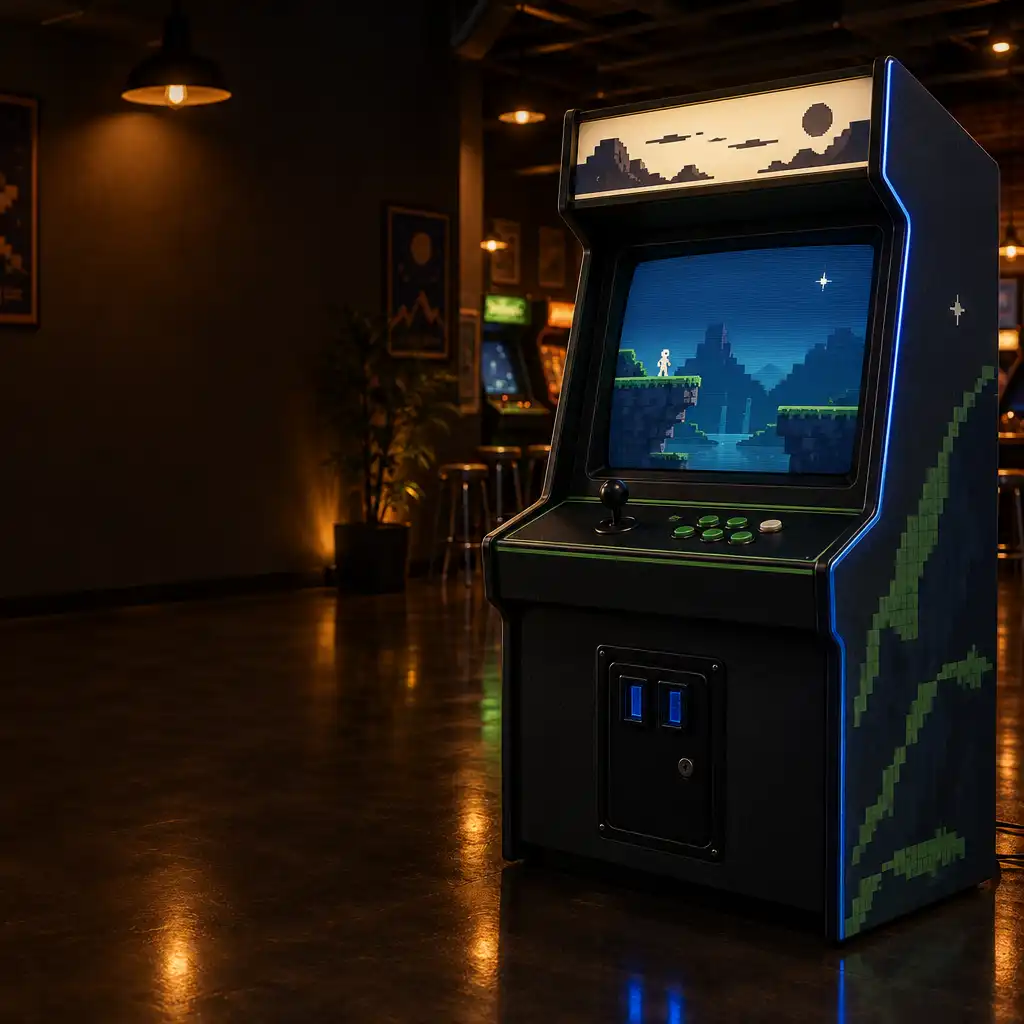
Original pixel-art platform arcade cabinet in a warmly lit dark arcade hall.
Atmospheric cabinet artwork only; it does not identify a specific RETROXEL title.
Genre guide

What makes a platform game feel arcade-ready

Platform-game language gives you a useful way to inspect a new cabinet before expecting a particular control layout or objective. These are reading lenses for the genre, not a checklist of confirmed features in every RETROXEL game.

Read the space

Movement and space

Platform games commonly ask players to read ledges, gaps, vertical routes and room for a safe landing. Before moving, take in the opening screen and ask what space appears useful or risky. A particular cabinet may frame that challenge differently, but a few seconds of visual reading can make an unfamiliar start feel less random.
Find the rhythm

Rhythm and repetition

Classic arcade appeal often comes from repeating a short challenge, learning its rhythm and gradually improving a route. That does not promise identical session design across the collection. It is simply a helpful mindset: observation can matter as much as immediate progress when an older arcade-style challenge asks for another thoughtful attempt.

Identify progress

Clear goals, changing pressure

Many platform games create challenge by balancing forward progress, hazards and limited room for error. When you choose a cabinet, identify what seems to count as progress before chasing it. There is no need to assume lives, timers, checkpoints or score rules; the useful first question is what the game itself appears to ask you to notice.

Editorial platformer advice

Timing matters more than speed.

A fast response can occasionally help, but it is not the only useful skill. In an unfamiliar platform game, calm timing gives you evidence: how movement feels, when a route opens and where a landing actually leaves room. Use these habits as general genre advice, then adjust to the cabinet you have selected.

  1. 01

    Learn movement before rushing

    Use opening moments to test how the chosen cabinet responds before committing to a risky route. Where movement pace or stopping distance matters, a cautious first attempt can reveal more than a hurried one. This is not a claim about a shared control scheme; it is a habit of gathering information before you ask the game for precision.

  2. 02

    Watch enemy patterns

    Where a game has enemies or moving hazards, give yourself a moment to observe what repeats before trying to pass it. Look for a safe window that appears more than once and use that pattern to make a calmer decision. Not every platformer uses opponents or cycles, so treat this as an optional reading tool rather than a universal rule.

  3. 03

    Practise jumps

    Repeated low-risk attempts can help you judge distance, landing room and timing before a narrow gap or elevated route becomes expensive to miss. This does not assume a jump button, double jump or fixed physics. It is about building confidence from visible results, one measured attempt at a time, rather than expecting success through speed alone.

  4. 04

    Look ahead before committing

    Scan beyond the immediate character position whenever the screen gives you enough information to do so. Older arcade-style design can be unforgiving, which makes a small amount of observation valuable before a commitment point. The next platform, hazard or route may alter your choice. That will not describe every title, but it is a useful reminder to read forward as well as react.

Editorial advice: use the game’s own behaviour to decide which of these habits applies.

First few attempts

A first-session observation routine

A first attempt does not need to be a perfect run. Treat it as a quick observation pass: learn what is visible, make one deliberate choice and use the result to guide the next attempt.

  1. 1

    Take in the opening screen

    Identify the player character or start point, visible route and any immediate danger before making a fast input. Presentation differs by cabinet, so this is an observation routine rather than an instruction manual. Early attempts can be useful for learning what the screen is communicating, even when the result is not a perfect start.

  2. 2

    Try one deliberate route

    Choose a modest, readable route rather than changing direction repeatedly under pressure. A deliberate choice makes the feedback easier to interpret: you can see whether timing, position or route selection needs attention. Not every game offers branching routes, but the habit of committing thoughtfully remains useful.

  3. 3

    Repeat one uncertain moment

    Where the game permits another attempt, focus on a troublesome gap, hazard or transition instead of treating the whole run as one blur. Repetition is a genre-learning technique, not a promise about retries or checkpoints. Different cabinets can ask for different kinds of precision, and one clear observation can improve the next read.

  4. 4

    Adjust after evidence, not frustration

    Change timing or route after noticing a pattern, rather than simply accelerating your inputs. That returns the focus to timing over speed and can keep a short session enjoyable. Stopping after a few attempts and returning with a fresh read is also a reasonable editorial suggestion, not a guarantee of better performance.

Editorial practice

Practice without guessing the cabinet

Use small experiments

Make one change at a time so an outcome is easier to read. You might wait longer before a jump, choose a safer visible route or give a moving element another cycle to reveal itself. Those are examples of observation and adaptation, not confirmed controls or mechanics. A small experiment turns an uncertain moment into information that can travel into the next attempt.

Let the chosen game set the rules

A cabinet’s own start screen, prompts and behaviour are the best guide to its specific objective and input expectations. Do not assume shared controls, button counts, remapping or controller support from a general genre guide. Check the current game context instead, because the useful details belong to the cabinet you are playing.

What this page does not assume

  • One control layout across the collection.
  • Identical objectives or routes in every platform game.
  • Any particular controller, remapping or retry feature.
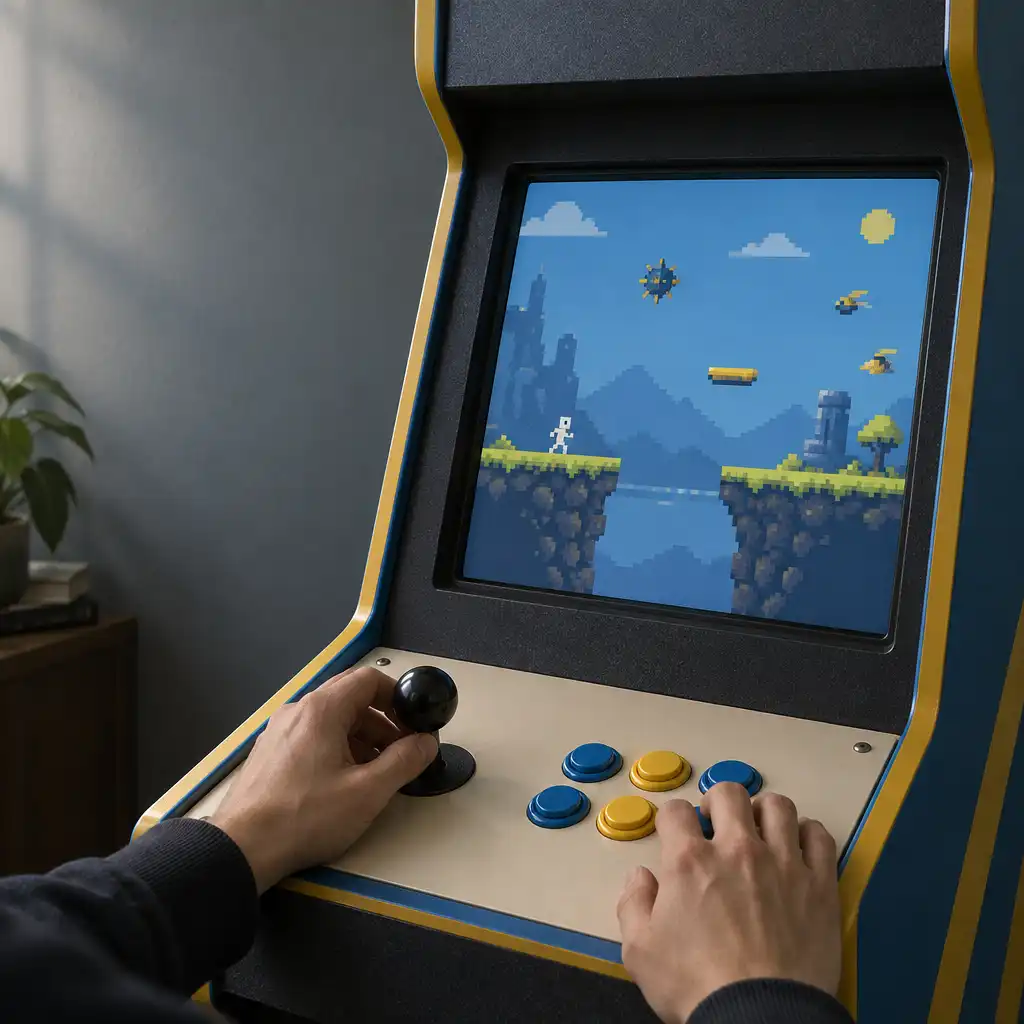
Close view of an original arcade cabinet with an abstract pixel platform scene and anonymous hands near the controls.
Practice is about reading the game in front of you, not assuming a universal cabinet layout.
Selection context

Reading a changing platformer selection

HundredsCollection scale
Verified app information

What is known

RETROXEL presents hundreds of retro arcade games, platformers are included in the broader collection, and new titles may be continually added. That is useful collection-level context, but it is not an exact genre breakdown or a promise that a named cabinet will remain available.

What can change

Availability and the platformer selection may change over time, so no editorial page should be treated as a complete permanent catalogue. Check the current official listing and the available in-app selection when you want live context. This keeps the distinction clear between stable genre guidance and details that may move.

During a run

Platformer mindset: patience, pattern, progress

Keep these three editorial cues in mind when a route begins to feel busy or unfamiliar.

Patience

Take a moment to read before an uncertain move, especially when the next landing or hazard is not clear. This is genre advice, not a request to use a pause feature. A calmer look can make a choice feel more deliberate.

Pattern

Where a cabinet presents moving threats or cycles, look for repeatable timing. Pattern recognition can replace rushed reactions with calmer decisions, without assuming any particular enemy type or obstacle system exists.

Progress

A newly understood section or cleaner route is useful progress, even before a full successful run. That perspective suits classic arcade repetition without turning play into a score, ranking or achievement chase.

Platform context

Where RETROXEL can be checked

Android

Current Google Play information

Android availability is current Google Play information. Use the official listing to check the live store context for RETROXEL: Retro Arcade Games rather than assuming compatibility, performance or availability for every device.

Windows through Google Play Games

Current Google Play information

Windows availability through Google Play Games is also current Google Play information. Check the official source for the live position instead of relying on a permanent claim about system requirements, controls or synchronisation behaviour.

Official store reference

Open the official Google Play listing

For current store information about RETROXEL: Retro Arcade Games by Retroxel / sungjun221, open the official Google Play listing. It is the appropriate source for live details and access, rather than a promise of device support, pricing or availability from this editorial page.

Open the official Google Play listing (opens in a new tab)

Official listing for package ID com.sjkim.retroxel2.

Choose another lane

Keep exploring the arcade by genre

Take the next read by the kind of challenge you want, not by a promise of a fixed catalogue.

Shooters

Shooters

Explore a different genre lens for rapid observation, positioning and arcade pressure, without assuming a permanent shooter selection.

Read the shooter guide
Puzzles

Puzzles

Take a more deliberate pattern-and-planning perspective while remembering that each puzzle cabinet can set its own pace.

Read the puzzle guide
Getting started

Getting started

Visit the broader guide for a practical introduction to approaching the collection without assuming universal controls.

Read the getting-started guide