
Now playing / Puzzles

Puzzle games in RETROXEL

RETROXEL: Retro Arcade Games is a broader virtual arcade collection with hundreds of retro arcade games, and puzzle games are one route through its cabinets. Rather than treating this as a fixed shelf, it helps to expect change: titles may be continually added, so the puzzle selection you see can differ over time. This page is a calm starting point for visitors who want to explore unfamiliar puzzle cabinets with a little more intention.

Depending on the cabinet, a puzzle game may suit a short, thoughtful session: observe the screen, form an idea, then test it. That is editorial genre guidance rather than a promise about every title’s rhythm, timer, controls or rules. Start with our general puzzle method when you meet a cabinet you do not yet understand.

View on Google Play (opens in a new tab)

Retroxel Arcade is an independent editorial site and is not affiliated with Retroxel, sungjun221 or Google Play.

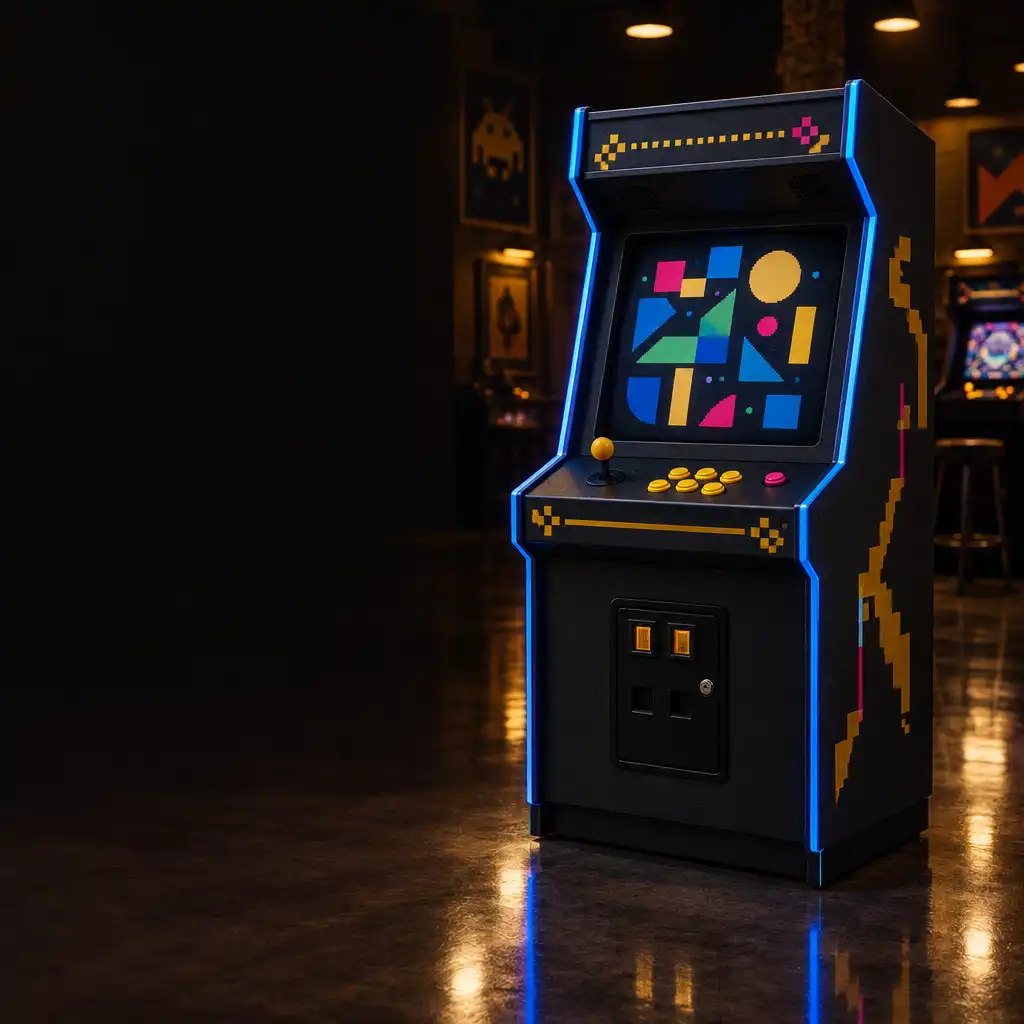
Original arcade cabinet illustration with an abstract geometric puzzle display
Illustrative arcade artwork, not a depiction of a RETROXEL game screen.
Catalogue context

A changing arcade, not a fixed puzzle shelf

Collection scale Hundreds

In the wider arcade

RETROXEL is described as having hundreds of retro arcade games. That collection-level fact does not provide a puzzle-game count, and it is not a reason to estimate one. Check the app or official listing when you want to see what is current.

Genre route

Puzzle is one way in

This page uses puzzle games as a lens for players who may enjoy noticing rules, patterns and relationships. It is not a permanent catalogue. Platformers and shooters are also part of the collection, while individual genre availability can change.

Editorial orientation

Look for a problem you want to learn

An unfamiliar puzzle cabinet does not need to reveal its whole answer at once. The more useful question is whether it gives you something understandable to investigate. These lenses are general editorial guidance, not claims that every RETROXEL puzzle title works in the same way.

A clear first question

A promising puzzle game often gives you a visible question to investigate, even when the solution is not obvious. Before acting, look for what changes after an input and what seems to matter on screen. The goal and feedback can differ by title, so treat the first moments as a chance to identify the question rather than guess its answer.

A pattern with room to test

Part of the pleasure can come from noticing a repeat, sequence or relationship, then trying a small theory. You do not need to assume a particular board, piece type or system. Give observation a moment before speed: a careful test can show whether the pattern you noticed is meaningful or merely decorative.

Learn and retry

A reset that teaches something

An unsuccessful attempt can still be useful information when it helps you revisit the apparent rules with a different hypothesis. If a title offers a restart or retry flow, it may provide a clean chance to test that new idea. Not every game presents reset options in the same way, so let its own screen guide the next move.

First-minute read

Read the cabinet before you rush it

Before forcing moves, give an unfamiliar screen a brief, low-pressure read. The display may communicate its objective in a different way from the cabinet you tried before. These three prompts keep the attention on visible evidence instead of assumed controls or universal puzzle rules.

Player pausing near arcade controls while studying an abstract puzzle-like display
A pause before action can make the next input more informative.
01

Find the visible objective

Look first for the apparent objective, target, condition or state change before deciding what an input should achieve. A game may frame that goal as an arrangement, route, score condition or something else entirely. The presentation differs by game, but identifying what appears to count as progress gives your first attempt a purpose.

02

Notice what the screen repeats

Scan for repeated symbols, movement, labelled colours or recurring positions, then interpret them in context. Colour alone is not an instruction, and a repeated visual detail may be atmosphere rather than a rule. The useful habit is to notice what returns and ask whether it is paired with another visible change.

03

Watch one action’s consequence

Use early inputs as information gathering when the title allows it. Notice what changes, what stays fixed and whether the game signals progress after an action. Input methods and feedback differ from cabinet to cabinet, so there is no universal button recipe here—only a reason to make each first action easier to read.

General puzzle guidance — editorial advice

Find the rule before forcing the solution

This repeatable method is for approaching an unfamiliar puzzle cabinet with more curiosity and less random input. It does not describe universal RETROXEL mechanics: individual titles can differ in goals, layouts, inputs, feedback and retry options.

Step01

Identify the objective first

Establish what appears to count as progress before trying to solve the screen. Look for a stated or visible objective, then separate that clue from decorative details that may simply set the cabinet’s mood. Some titles explain their goals directly while others reveal them through the display, so reread on-screen guidance where it is present and let the available evidence lead.

Why it helps: an input is easier to judge when you know what you are trying to change.

Step02

Look for repeating patterns

Compare repeated elements or outcomes and ask what remains consistent across attempts before assuming an exception is the answer. A pattern may be visual, positional, timing-related or based on an underlying rule; it does not need to be a familiar grid, matching system or number sequence. The aim is to find one relationship worth testing, not to name the whole puzzle immediately.

Observation prompt: what appears again, and what changes alongside it?

Step03

Make deliberate inputs

Choose an input because it tests a specific prediction, rather than repeating actions quickly without noting their effect. There is no assumed button count, gesture, keyboard key or controller arrangement here. Whatever input the title provides, a purposeful attempt creates clearer feedback: you can compare what you expected with what the screen actually did.

Why it helps: a deliberate move turns play into a readable experiment.

Step04

Test one idea at a time

When a game permits experimentation, change one variable or try one hypothesis, then pause to assess the result before adding another assumption. This is a useful habit rather than a claim about every title’s pace or modes. Keeping the experiment small can make the screen easier to interpret and keeps an interesting rule from being buried under several guesses.

Sequence: observe → predict → test.

Step05

Restart with a different approach if stuck

If an approach repeatedly fails, step back and begin again with a changed assumption rather than carrying unhelpful momentum forward. A title may present restart and retry options differently, and this page does not assume a reset button, undo command or saved progress. Where a fresh attempt is available, use it to test a new reading of the rule—not as a judgement on the first one.

Reassurance: changing the question can be a useful form of progress.

When stuck

Change the question, not just the speed

Spot the unhelpful loop

It may be a sign to pause when you are rushing, reusing the same input without observing its result, or treating an unclear objective as a reflex challenge. None of those moments prove that a title has only one solution or that you have failed. They simply suggest the current assumption may not be giving you useful information.

  • Pause before repeating a familiar move.
  • Name the assumption you are testing.
  • Notice what the screen has actually shown.

Choose a smaller next experiment

Return to the visible objective, choose one observation to verify and make one different attempt if the title’s flow allows it. This links back to the rule-first method without promising a successful outcome. A smaller experiment can replace a vague feeling of being stuck with one clear question the screen may be able to answer.

  • Restate the goal in plain language.
  • Pick one repeated detail to check.
  • Try one purposeful alternative.
A different approach can be the progress: discovering what does not fit the apparent rule gives you information for the next thoughtful attempt.
Retroxel Arcade editorial guidance
Browse by mood

Pick the next cabinet by mood

You do not need a complete permanent catalogue to make a sensible first choice. Use the information visible in the app, then choose the sort of attention you feel like giving a cabinet.

Quick mental warm-up

Want a quick mental warm-up?

Consider a title whose visible objective looks readable enough to investigate in a short sitting. Actual pacing varies by game, so this is not a playtime promise. Look for a readable first goal in the displayed information, then give yourself permission to move on if the cabinet asks for a different mood.

Rule curiosity

Want a deeper rule to unpack?

Try a title that appears to invite repeated observation and small experiments. It may reward curiosity and a few notes-in-your-head, but that does not imply every puzzle cabinet has a deep campaign or layered system. Follow the visible feedback and decide whether the rule feels interesting enough to revisit.

Change of pace

Want a change of pace?

Move between puzzle, platformer and shooter categories according to mood. These are verified collection genres, not a claim that every category is always represented in the same way. This guide stays puzzle-focused while leaving room for a different arcade rhythm another day.

Check the current listing before you play

Current availability

Android and Windows through Google Play Games

Current Google Play information states that RETROXEL is available for Android and Windows through Google Play Games. These labels are factual platform context only; they do not make assumptions about device compatibility, performance, controller support or setup requirements.

AndroidGoogle Play availability
WindowsThrough Google Play Games

Store details can change

Ads, in-app purchases and catalogue details are mutable store information. Check the official Google Play listing (opens in a new tab) for the latest app details instead of relying on fixed claims here. Retroxel Arcade is an independent editorial site, not an official store or developer page.

How to read this guide

Verified app context

Verified collection context

The page uses a limited set of collection and platform facts:

  • RETROXEL presents hundreds of retro arcade games.
  • Puzzle games sit among its genres, alongside platformers and shooters.
  • Titles may be added over time, so the catalogue can change.
  • Current Google Play information covers Android and Windows through Google Play Games.
Editorial guidance

Retroxel Arcade editorial guidance

The observation, pattern and reset suggestions on this page are general puzzle guidance designed to help visitors approach unfamiliar games thoughtfully. Individual titles may differ in goals, layouts, inputs and retry options. Retroxel Arcade is an independent Australian English editorial website and is not affiliated with Retroxel, sungjun221 or Google Play.

Current details

See the current RETROXEL listing

For live app information and availability, open the official listing for RETROXEL: Retro Arcade Games by Retroxel / sungjun221. The listing is the appropriate place to inspect the current store details before deciding whether the arcade suits your next session.

Open the official Google Play listing (opens in a new tab)

Retroxel Arcade is an independent Australian English editorial website and is not affiliated with Retroxel, sungjun221 or Google Play.